
Define what must remain consistent
Identify the sensory and technical characteristics that matter most: appearance, aroma, taste, sweetness, texture, solubility and any project-specific specifications. Not every attribute carries the same risk.
Translate the approved sample into production controls
The manufacturing team needs measurable inputs, process parameters and acceptance criteria—not only a sample to imitate. This creates a more reliable bridge between R&D and production.
Use first-production review as a formal milestone
The first commercial run should be reviewed against the approved reference and documented requirements. Deviations should be assessed before the product is released.
Control packaging and coding as part of quality
Correct artwork, batch coding, sealing, can integrity, case packing and traceability are part of finished-product quality, not merely downstream operations.
Capture learning for the next run
Record observations from production, packing, transport and market feedback. A disciplined feedback loop helps improve repeatability without changing the product unintentionally.
Convert the approved sample into measurable production criteria
An approved development sample is a reference, but commercial production needs criteria that can be controlled. The team should document serving size, preparation method, key sensory attributes, appearance and other parameters that are critical to preserving the approved experience.
The objective is to reduce the gap between “this sample tastes right” and “this production run matches what was approved”. The clearer the reference, the easier it is to investigate any deviation later.
Expect scale-up to introduce new variables
Mixing time, equipment geometry, batch size, powder flow, filling conditions and raw-material variation can all behave differently at commercial scale. Scale-up is therefore not simply a matter of multiplying a laboratory recipe by a larger number.
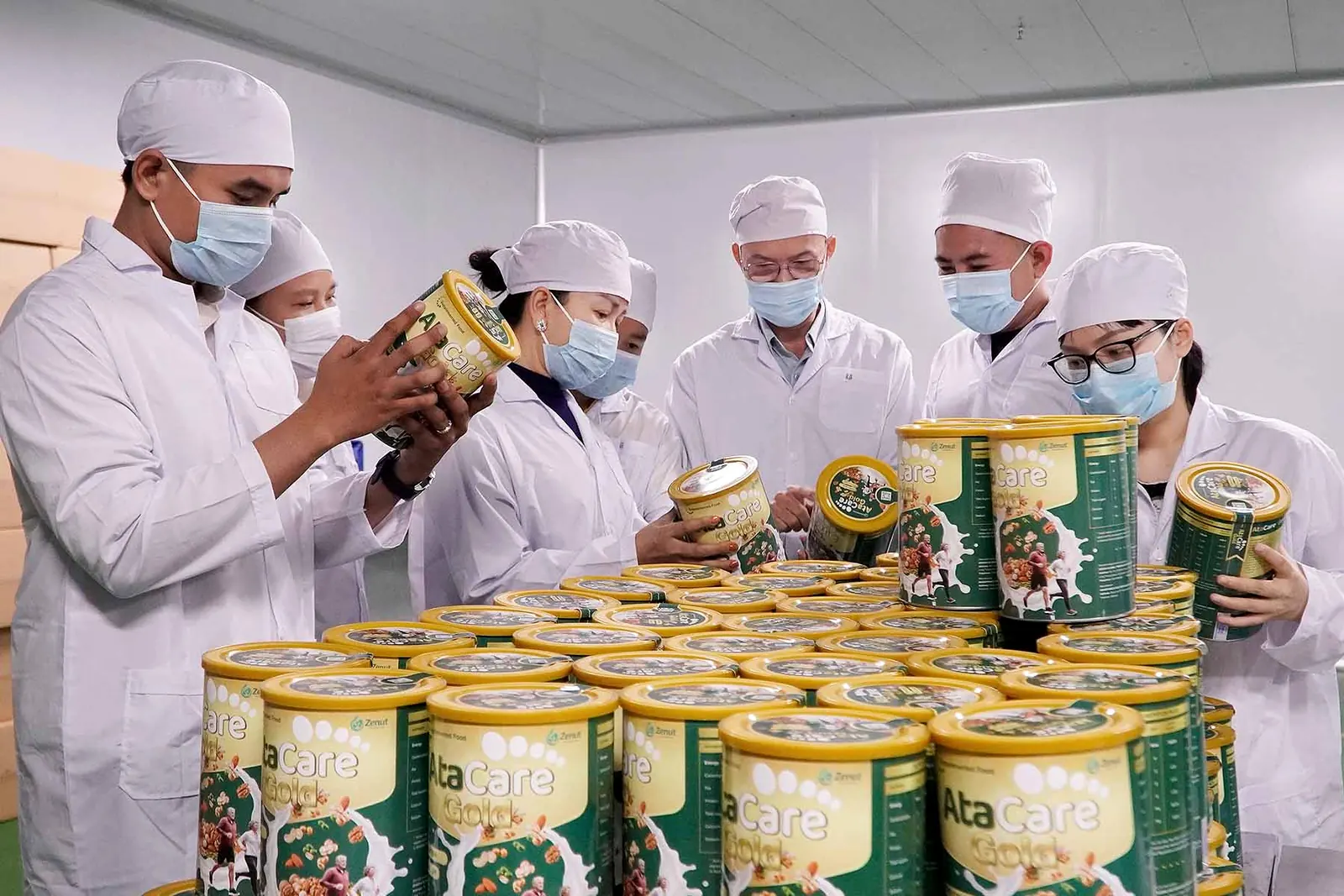
A disciplined first production run should verify whether the process reproduces the critical characteristics of the approved sample and should document any adjustments made to stabilize the result.
Define quality-control points before production starts
The project should identify which checks belong at raw-material receipt, in-process stages, filling, packing and finished-product release. The exact controls depend on product type and project scope, but ownership and decision rules should be clear before the run begins.
When a result falls outside the agreed range, the team needs a defined process for holding, investigating, correcting or rejecting the affected material rather than relying on ad-hoc judgment.
Cang-term repeatability matters more than one perfect first batch
Commercial trust depends on repeatability. A beautiful first batch followed by inconsistent later batches creates more risk for the brand than a stable, controlled product that can be reproduced. After each run, the team should review deviations, feedback and the controls that may need to be tightened.
As volume grows, equipment, production shifts or batch size may change. Scale-up is therefore an ongoing management process, not a one-time handoff from product development to manufacturing.
Scale-up succeeds when the approved product is converted into a set of shared, controllable standards that R&D, manufacturing and quality teams can work from consistently.